Social Listening for Brands in the Big Data Era
Social listening connects the ongoing interpretation of online brand discussions to business decisions. Reliable consumer research requires consistent aliases, exclusions, time periods and source coverage before comparing competitors, while recording needs, sentiment and explicit product use separately. Proportions of public discussion are neither market share nor failure rates. Each finding should remain traceable to source evidence, open conditions, an owner and a verification method so product and service improvements can be tracked.

The opening illustration and original Figures 1–6 are retained to explain established methods and historical interfaces. The historical numbers shown in those charts are not evidence about current brands, vaccines or consumers, nor do they represent current platform interfaces or data coverage. The earbud research scenario introduced below is explicitly labeled as hypothetical.
In 2011, a McKinsey Global Institute report discussed how big data could affect productivity, competition and innovation. As the internet and information industries have developed, collecting, organizing and analyzing data has also become an important business task.
Big data means large volumes of data in many forms. Because the content is diverse and useful information is dispersed, newly collected big data is difficult to use directly. Cloud technologies for storing it, and analytical technologies for organizing it into useful information, have therefore become important areas of information technology.
Social listening developed in response to this need as a method of market research and consumer behavior analysis. Businesses can use it to extract useful information from online big data, gather intelligence, set a clearer direction and support productivity and competitiveness. Analyzing trends also helps them assess possible industry developments and opportunities. Brands can use the findings to adjust their image and positioning, strengthen their advantages and broaden their influence.
What is social listening?
The internet has become an important channel for communication between brands and their audiences. Online information is produced and circulated quickly, while people share their thoughts on social networks. Searching for answers to everyday problems, reading product reviews before buying and checking restaurant reviews have become familiar activities. Social media therefore provides a window for dialogue between brands and customers. Online reputation can affect trust and purchasing behavior; brands can also use these conversations to understand what customers think.
Social listening is a way to collect online big data, analyze it and identify the meaning behind online word of mouth (source: Sprout Social).
Social listening uses collection technologies, machine learning and AI to examine how often topic keywords appear, how people discuss them and who participates. The resulting material is organized and interpreted as useful intelligence. By choosing different topics, teams can organize publicly available customer discussions and opinions, while learning about potential customers, competitors, industries and emerging trends.
Social listening can help a brand investigate:
- 1. Where are its audiences, and how can it communicate with them effectively?
- 2. What do they care about?
- 3. How do they assess recent important events?
- 4. How have marketing or PR strategies performed, and how have audiences reacted?
- 5. How do people feel about an event's promotion and content?
- 6. What is attracting attention, and what is changing in the industry?
- 7. Which opinion leaders matter within the industry and audience?
- 8. What are competing brands doing, and how are audiences responding?
Compared with social monitoring, which focuses more closely on gathering observations, social listening takes a broader view of what the data means. Social monitoring provides information and numbers; listening interprets audience preferences, the factors behind an event and popular topics, and develops hypotheses about industry trends that still need to be tested. Social listening therefore builds on the material collected through social monitoring, emphasizing interpretation of both qualitative text and quantitative data.
For example, when a brand faces unexpected negative online reviews, social monitoring can help locate the problem and its sources. Social listening can further examine whether discussion is spreading, which speakers and channels influence it, and what people care about. Teams can then use those findings to plan PR communication and assess how to reduce the risk to the brand.

Figure 1. Analyzing online reviews through social listening can help identify an increase in negative mentions and support an earlier response.
When social listening and social monitoring work together, teams can see the conversation more fully. This understanding helps them choose relevant communication channels, develop persuasive messages and provide services that meet audience needs. During implementation, ongoing observation and feedback also allow them to adjust the strategy and check whether it achieves the intended result.
Putting that concept to work after a product launch is often where teams get stuck. A brand can read unboxing posts, comments and support complaints every day and still struggle to answer a straightforward question: what do consumers actually want us to change? “It is hard to use” might mean the battery dies before the end of the workday, or that exchanging the product is too complicated. Counting both as negative mentions tells marketing that people are unhappy, while leaving product and support teams with no clear course of action.
In practice, social listening is the ongoing discipline of collecting and interpreting online discussions about a brand, product or need, then turning what consumers care about into concrete decisions. Raw discussion data—large in volume and varied in format—is rarely useful on its own. The real work lies in setting the right scope, separating distinct concerns and verifying what happens after a change is made. That carries forward the core purpose of social listening: understanding audiences, competitors and the market so that positioning, communication and service decisions rest on evidence.
This walkthrough follows a hypothetical example: a Taiwan brand, SunnySound (晴音), has launched its AirBud (Air芽) wireless earbuds and wants to understand post-launch complaints while comparing them against an imagined, similarly priced competitor, Forest Mini (森聽 Mini). All brand names, product names and sample comments are created for instruction and do not represent real sales or monitoring results.
Turn the comments you see into a research question
Building on the distinction outlined above, social monitoring focuses on spotting where a brand is mentioned, what happened and which messages need a reply. Social listening pushes that same evidence further: why does this concern arise, is it tied to a specific use case, and which needs should the business address first? Both workflows rely on keywords, trend charts and source lists; the difference lies in the decisions the analysis needs to support.
For SunnySound, “understand brand reputation” is too broad to act on. A workable question is: “What obstacles do commuters encounter after AirBud launches, and which of them can be addressed through product changes, documentation or after-sales service?” Four weeks before and after launch serves as a starting window for this exercise, though an actual study should follow the launch schedule, available data and product cycle. Use pre-launch discussions to identify expectations; after launch, separate trials, purchase intent and reported use so that “the advertisement looks good” does not end up counted as a satisfaction rating.
For the basics of sources, mention volume and sentiment, see the introduction to online public opinion analysis. This article concentrates on brand consumer research. The report-writing tutorial covers delivering a full report, while ChatGPT and text mining examines AI-assisted classification and verification.
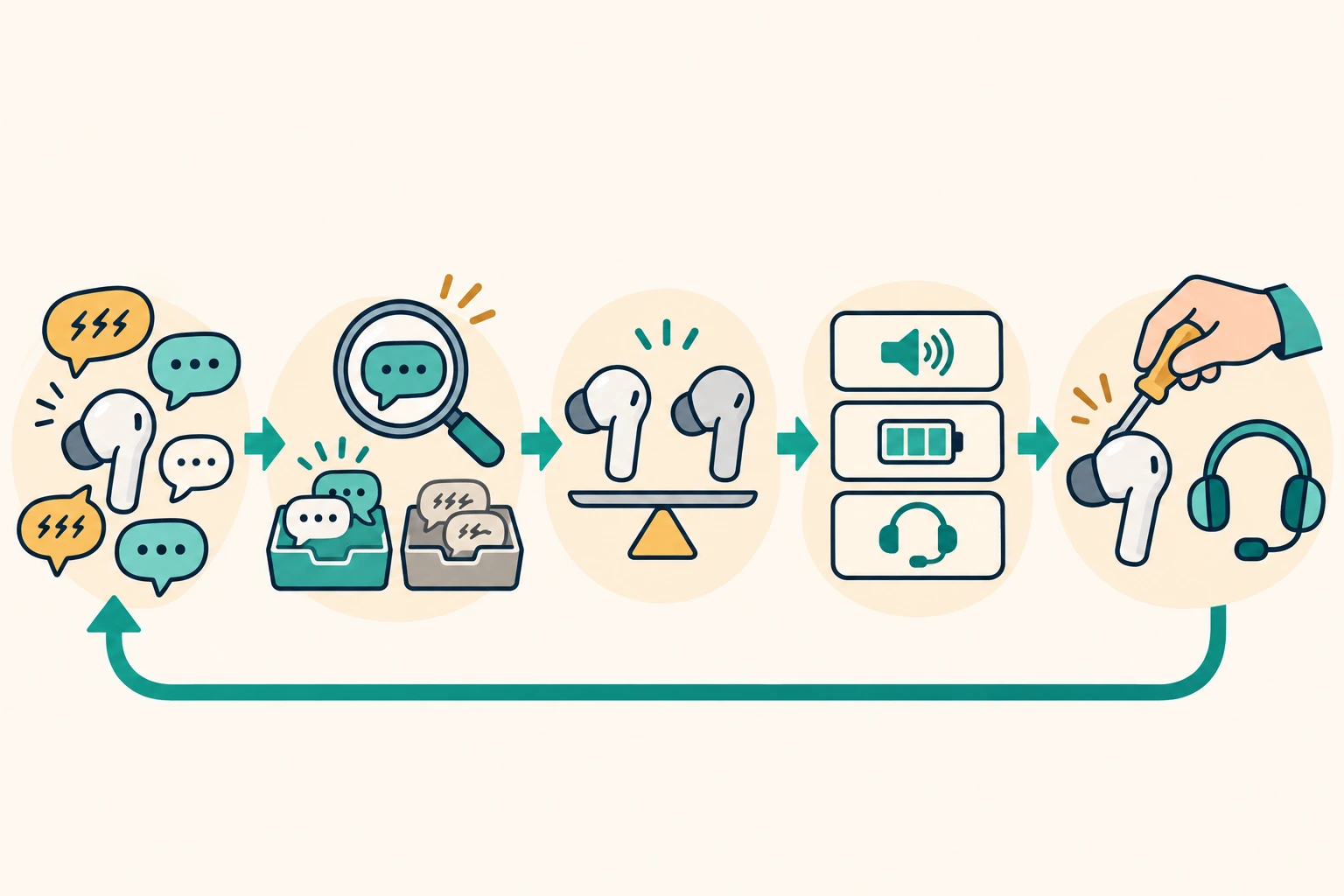
What does social listening do?
Reviewing print media and searching for brand or event coverage can be useful, but the work takes time and people. Social listening technology can take over some of the repetitive work of searching individual channels, browsing, recording information and turning it into charts.
LargitData's InfoMiner social listening platform is one platform for this work. InfoMiner monitors more than 500,000 online channels and offers more than 30 types of analysis report for different uses and brand needs. Available historical periods must be confirmed against the plan and source permissions.
1. Set keywords and conditions to search different scopes
A business can choose a brand, campaign, industry or public issue as a monitoring topic and set keyword groups to define the material it wants. The person configuring the query needs to understand online vocabulary: a brand may have several abbreviations or nicknames, and fans of brands or celebrities may use particular names. Including relevant language and removing irrelevant results improves the reliability of the research.
After setting keywords, adjust the conditions. These may include:
- 1. Observation period
- 2. Source category
- 3. Channel
- 4. Sentiment: positive, neutral or negative
- 5. Excluded keywords or topics
Sentiment filters can isolate the opinions you want to inspect. For example, a negative filter helps you read what critical posts are saying. Excluded keywords can reduce confusion caused by names shared with unrelated entities. When researching a local issue using a place name, excluding unrelated hotel and restaurant travel advertisements helps keep commercial material out of the results.
Discussion of a brand may concern a recent campaign, service complaints, product performance, recruitment and interview experiences, or the brand's stance on a social issue. A second layer of keywords helps separate this broad topic into more orderly categories.
Brand aliases and exclusions determine whom you hear
Applying this to the SunnySound scenario starts with building a brand vocabulary sheet containing Chinese and English names, model names, abbreviations, nicknames, official accounts and misspellings consumers actually use. Rather than inventing a long alias list upfront, assemble the first version from product pages, common support questions and known relevant posts, then extend it from search results. An ambiguous brand name may need an accompanying term such as “earbuds” or a model name, whereas searching only for the model risks missing complaints that mention only the brand.
The following shows illustrative logic, not syntax that works unchanged in every tool. OR matches either term, AND requires both conditions to hold, and NOT excludes a condition. Quotation marks, parentheses, synonyms and comment matching must follow the chosen tool’s rules. For this Taiwan exercise, keep the actual Chinese aliases in the query even when the research team works in English.
Candidate topic = ("晴音" OR "SunnySound" OR "Air芽")
                  AND ("耳機" OR "Air芽")
Candidate exclusions = unrelated namesakes, irrelevant recruitment,
                       resale advertisements unrelated to the product
Needs = battery life / fit / connectivity / calls / price / exchanges
Resist restricting the first search to negative sentiment. A comment like “It would be perfect if it lasted longer” may be tagged positive while expressing a clear battery-life need. Sample both recent and earlier posts, log relevant, irrelevant and missed examples, and only then finalize exclusions. Do not automatically exclude “advertisement,” “sponsored” or “return”: genuine consumers may be describing a gap between an advertised promise and their experience.
After each exclusion change, check whether known relevant posts still surface, and keep the query, change date and reason in a version log. Before comparing periods across a rule change, recalculate available data under the same rule version. Flag any period that cannot be recalculated so a query tweak never masquerades as a shift in reputation.
Your research table should at minimum retain the post or comment identifier, source URL, publication and collection times, source, matched brand and terms, excerpt, relevance decision, whether product use is explicit, and any duplication or repost relationships. Distinguish posts from comments: replies under one post are not all independent purchasers, and one account is not necessarily one person. Leave age, gender and residence blank when the source does not establish them.
Choose tools by their job, then test the workflow
Choose tools according to the data sources and outputs you need. Before evaluating charts and interfaces, prepare a small acceptance set of known relevant, irrelevant and easily missed posts, and check whether each can be retrieved, which fields are supplied and how far history extends. Across the sections that follow, we walk through three tools that serve different roles—starting here with Sprout Social Listening for international social teams, followed by InfoMiner alongside chart and competitor workflows and Google Trends alongside trend tracking.
Sprout Social Listening: build research topics within international social operations
Teams already managing social operations across countries can evaluate Sprout Social Listening. Confirm your account’s Listening access and required sources first, then follow the Query Builder instructions to create a Topic with brand and exclusion terms, checking preview results before saving. Use comparable conditions for both brands, and inspect Chinese aliases and English names separately to make sure unrelated overseas namesakes do not dominate the results.
Once the topic is set up, use Topic Insights filters to inspect messages by source and period, then narrow the view with terms such as battery life or exchanges and add verifiable needs to the shared research table. If a group of results disappears, check source access and query settings before interpreting the drop as a disappearing need.
2. Generate article lists and analysis charts automatically
Once the conditions are set, the platform can summarize discussion trends, the distribution of sources, active channels, spread, sentiment proportions and popular keywords for the observation period. Bar charts, line charts, pie charts and tables make these different views easier to inspect.
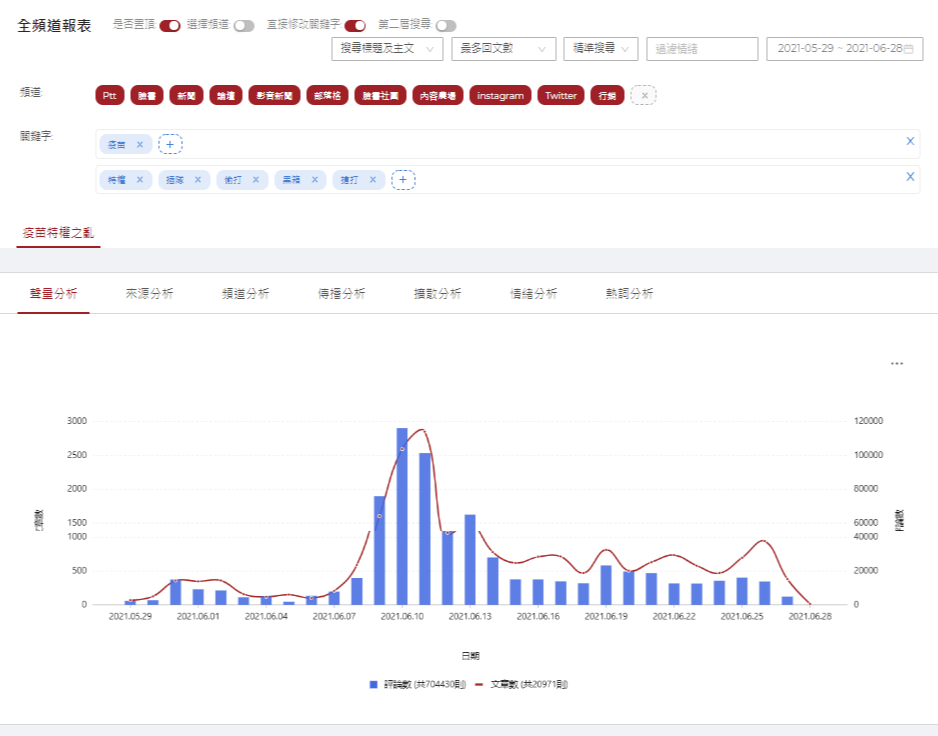
Figure 2. Automatically generated charts, including discussion trends, present the analysis in a form that is easy to review.
Teams can also compare the discussion volume of several topics, or categorize subtopics to see which issues are prominent around a brand. Where a source provides usable demographic data with a clear basis, they can examine the people participating. If gender, age or location is unknown, it should not be inferred directly from an anonymous account.
Switching views on the analysis platform allows a team to examine how a topic is being discussed from several angles.
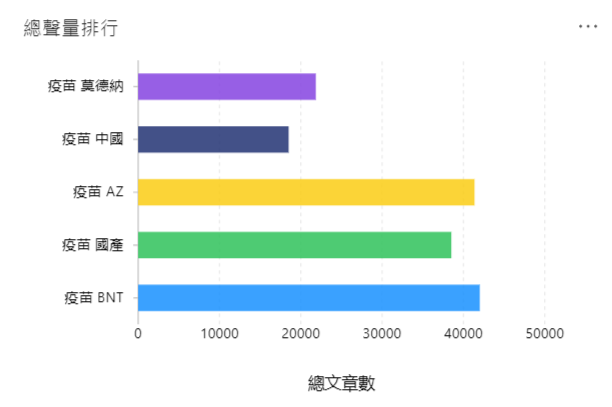
Figure 3. A comparison of discussion volume about different vaccines using InfoMiner.

Figure 4. The original article's demographic analysis illustration. The basis and available scope of gender, age and location data require separate confirmation; unknown attributes remain unknown.
Compare competitors with consistent rules
When multi-topic volume comparisons are applied to competitor research, the goal is not simply counting mentions but understanding under what conditions consumers choose or pass on a product. Create a separate vocabulary sheet for Forest Mini and apply the same sources, periods, languages, relevance criteria and deduplication rules, then group findings by needs such as commuter calls, prolonged wear and exchanges. If a new product’s first week overlaps with a competitor’s mature phase, compare time since launch as well rather than turning different lifecycle stages into a brand ranking.
Share of voice can be defined as qualifying mentions of this brand divided by qualifying mentions across all included brands. Decide beforehand whether a post mentioning both brands counts toward each, and apply that rule consistently. The result describes discussion share within the defined dataset, not market share. Mark advertisements, giveaways, media reposts and controversies separately, since any of them can raise volume without demonstrating stronger approval.
Always show the denominator for needs comparisons too. You might calculate the proportion mentioning call problems among relevant discussions that explicitly report product use for each brand, but that remains a proportion within the observed sample—not a failure rate among all buyers. When a platform does not provide complete comments, present results by source and retain the coverage gap instead of summing totals from different tools.
Read positive and negative comments side by side. A hypothetical remark such as “Forest is clear on the train, but people cannot hear me using AirBud in the wind” identifies a testable situation rather than a proven hardware defect. Preserve visible details—phone model, firmware, environment and evidence of actual use—so the product team can reproduce it, and mark unstated conditions as open questions.
InfoMiner: connect Taiwan brand discussions to sources and follow-up
For teams putting these brand-and-competitor comparisons into practice in Taiwan, InfoMiner supports keyword and source monitoring, side-by-side discussion comparisons, source references and notifications, making it well suited to following local news, social media and forums. Start by providing both brand vocabularies, the study period, required sources and acceptance posts, then confirm the plan’s coverage before creating separate brand topics.
Begin by reading source posts in the brand list to refine aliases and exclusions, then examine changes by source and period. If battery concerns cluster, return to the list to separate distinct users from reposts of one incident or comments without actual use. Log verified source URLs and needs in the research table, and confirm the available plan and fields before relying on exports or integrations. Finally, configure notifications for the needs being followed, complete with named recipients and a handover procedure. The deliverable is a traceable discussion list, changing needs and concrete questions requiring action.
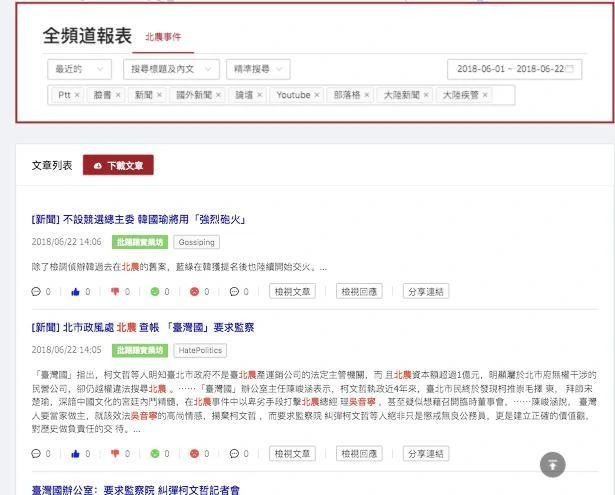
3. Understand community opinions
Alongside charts, a listening platform lists articles within the selected scope and can present them by measures such as replies, likes or time. Depending on the fields available from each source, records may include dates, times, reply counts and channels. Readers can open the articles or comments to inspect the detail.
For example, when examining discussion about how to use a vacant local site, a reader might find comments proposing a park. They can then return to the second layer of keywords and search for discussion about building a park there, gaining a more detailed understanding of the proposal.

Original Figure 2. After the conditions are set, InfoMiner lists the articles it has collected.
Translate sentiment into work a department can own
Once you have reviewed the source posts and comments, the next step is a needs taxonomy that connects directly to departmental decisions. Begin with top-level categories—product experience, price and promises, purchasing and delivery, after-sales service, missing information and other/uncertain—then add subcategories such as battery life, fit, connectivity, calls and warranty as the source material warrants. Define each category with clear inclusion and exclusion examples, allow multiple needs per comment and record sentiment in a separate field.
| Hypothetical comment | Need interpretation | Next action |
|---|---|---|
| “Fine for the commute, but flat before my afternoon video call.” | Battery life; duration and mode need confirmation | Product team reproduces the conditions and checks battery documentation |
| “I want replacement tips, but cannot find the specification online.” | Missing accessory information, not necessarily a defect | Content and support add size, compatibility and purchase information |
| “Support replied quickly, but there is no update after I returned it.” | Positive response speed; negative exchange progress | After-sales team checks status notifications and case handovers |
These are invented teaching comments. In a real study, link each need to its source and keep “consumer statement” separate from “analyst inference.” “Flat in the afternoon” is a statement; “the battery design is defective” is an inference requiring investigation. A few public comments can point to something worth investigating, but they cannot replace interviews, support records, return reasons or product tests.
Once the categories are drafted, have two people familiar with the product independently classify the same selection, resolve disagreements, revise the definitions and check another selection. AI can suggest candidate labels and summaries, yet manual review should still include neutral and mixed sentiment, irony and low-volume needs. Auditing only popular complaints can leave new concerns permanently hidden under “other.”
4. Receive timely notifications
In addition to active searches, LargitData's InfoMiner provides notifications. When a specified keyword combination meets an alert condition, such as an unusual increase in discussion, the platform detects it through monitoring. According to the official product description, qualifying new mentions can be sent to designated recipients within 15 minutes, helping a team assess a change in the conversation earlier. Negative issues can be investigated and addressed, while positive opportunities can also be considered.
Before connecting alerts to SunnySound's workflow, agree on the keyword combinations, monitored sources, comparison baseline, recipients and on-call coverage, then test the setup against a known relevant event to verify that each alert includes an accessible source trail. When a battery or exchange alert arrives, check for duplicate reposts, shifts in source coverage and the underlying post before routing it to product, support or PR. Keep in mind that silence from the alert system does not prove there are no complaints—it may instead signal a gap in source access, trigger rules or delivery.
5. Find influential opinion leaders
Marketing and PR require both a message that reaches the intended audience and suitable channels for communicating it. Besides the social networks an audience uses, influential opinion leaders can help reach a relevant group, expand exposure and support trust and action. Some issues develop from statements by a small number of influential participants, whose comments shape how others understand the issue.
Social listening can help identify influential participants in a topic, giving businesses a better understanding of how opinion forms and supporting more targeted marketing and PR decisions.
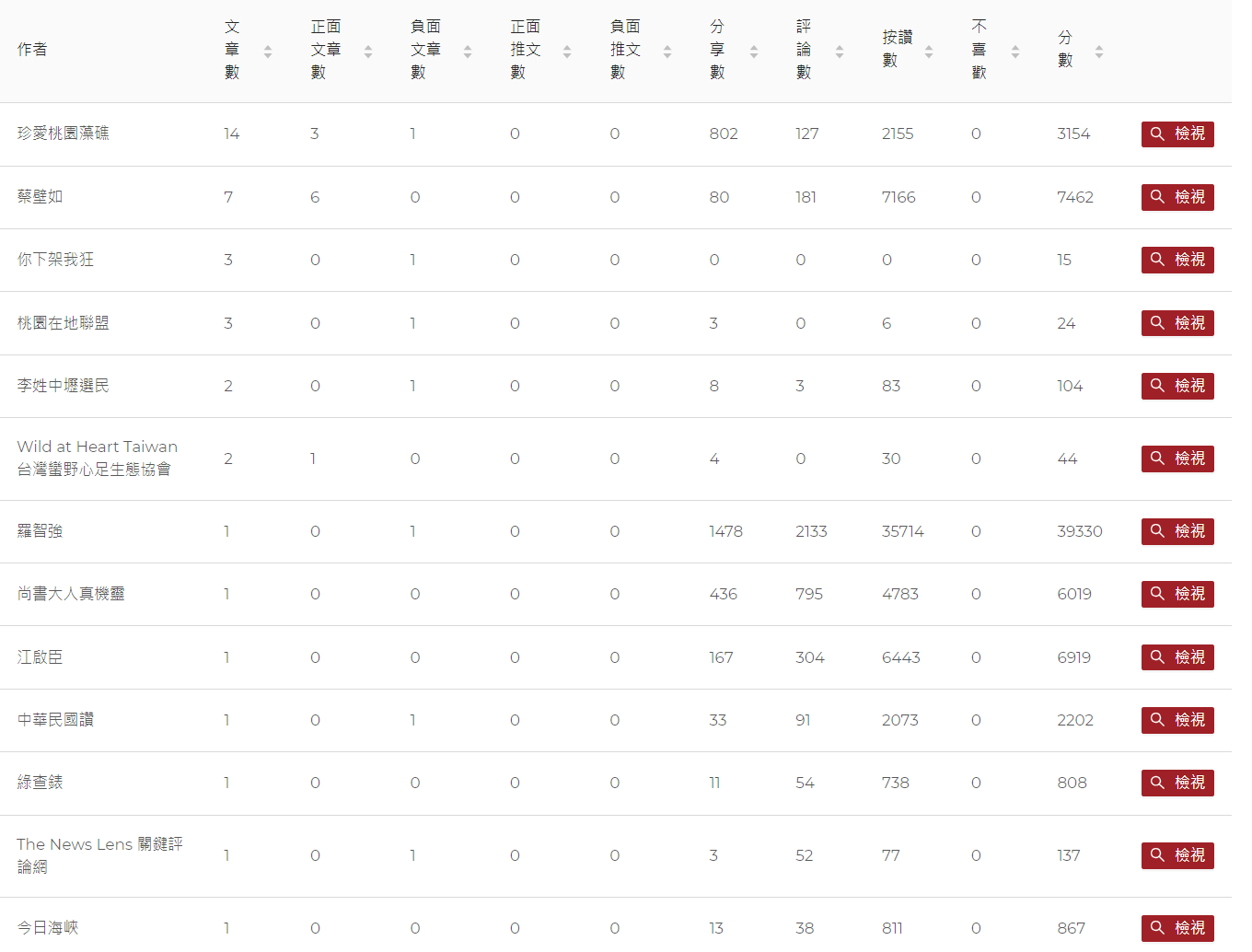
Figure 5. Using social listening to identify opinion leaders within a topic.
In the hypothetical earbud study, break the search into subtopics such as calls, fit and after-sales support to spot accounts or communities that are repeatedly cited and spark substantive discussion, then read their original statements, replies and repost timing. Follower, like and reply counts are useful leads, but none on its own proves influence over purchasing decisions. Separate firsthand use, professional testing, secondhand retelling and paid partnerships; leave unverified identities unknown and review voices across different audience sizes. The practical deliverable is a source-linked list of potential communication contacts organized by topic—bearing in mind that one influential creator's complaint cannot stand for every customer's needs.
6. Follow current topics and changes in trends
LargitData's InfoMiner provides views of online topics so a business can understand what is drawing attention. Popular discussions can provide references for joining a conversation, preparing for possible negative effects, writing content or planning a campaign.
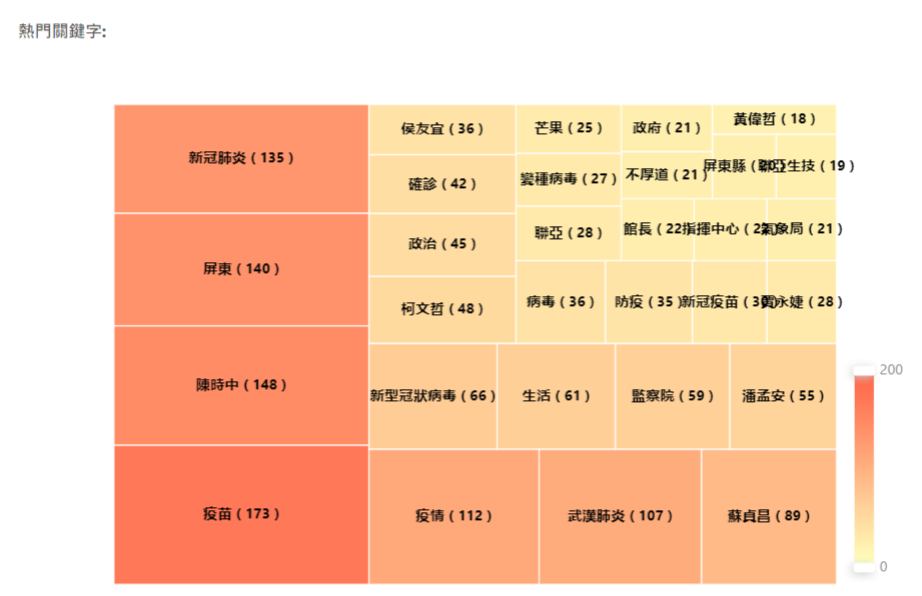
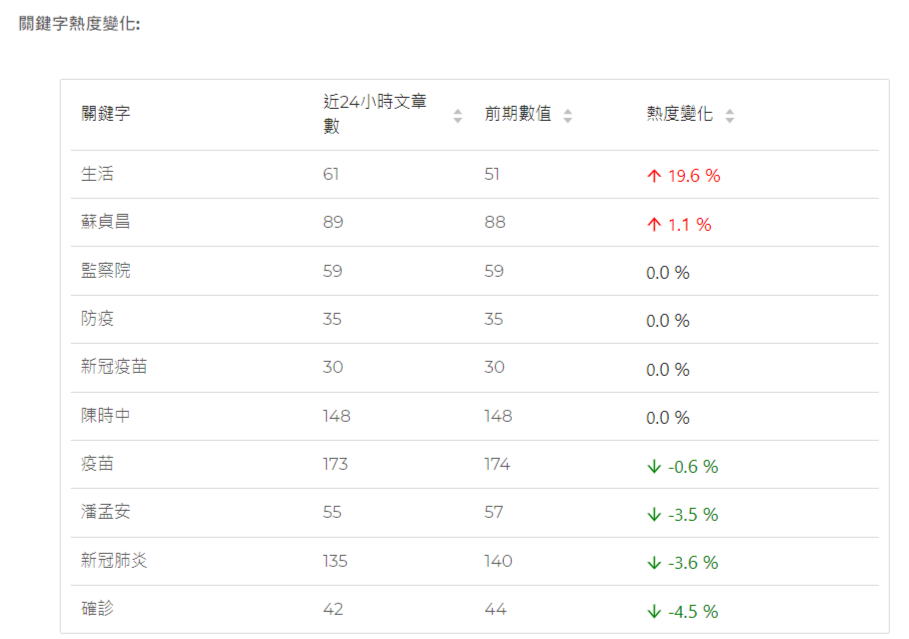
Figure 6. Comparing keyword popularity and changes over time helps reveal the topics attracting attention.
Google Trends: add the questions people search for
Alongside tracking trending topics across social platforms, Google Trends complements discussion research with a view of search interest. Open Explore, select Taiwan and match your listening study’s research period, then follow the search-term comparison instructions to add brand or need terms. Keep geography, period, category and search type consistent, and distinguish search terms from topics.
Start with a category such as wireless earbuds and its related queries, then try product names and specific needs such as earbud calls or ear-tip sizes. In our hypothetical scenario, a sizing-related query could prompt a return to social posts or shape an interview question. Retain your settings alongside downloaded or recorded results; if a product name lacks data and you look at the category instead, note clearly that category results cannot represent SunnySound’s customers specifically.
Social listening developments in 2026: AI, audiovisual content and workflows
Social listening developments in 2026 include large language models (LLMs) supporting semantic analysis, multimodal technologies extending analysis to video and audio, and AI agents assisting with queries and information organization. These capabilities can strengthen existing work, but data scope, interpretation quality and workflows still need individual checks.
LLM assistance with sentiment and emotional context
Large language models can support the analysis of irony, slang and cultural context alongside existing sentiment classification. They can also help organize changes in a discussion, from initial curiosity and consideration to criticism or support. However, interpretation can be wrong, and changes across a period should not be treated as one consumer's complete journey. Meltwater's GenAI Lens monitors how brands appear in answers from AI assistants such as ChatGPT and Perplexity, providing another view of brand exposure. AI-generated statements and actual consumer opinions need separate analysis.
In SunnySound's workflow, the team can ask a model to suggest labels for a shared set of source posts using the existing needs framework while retaining the exact sentences supporting each tag, then have a human reviewer audit mixed sentiment, irony, low-volume needs and ambiguous cases. Comparing periods still requires holding the rules constant and checking source composition. GenAI Lens addresses a different subject—AI-generated answers: confirm plan access and supported models, standardize the brands, competitors, prompts and languages, and inspect both the answers and cited sources. Label those findings clearly as AI representation and keep them separate from consumer-comment denominators.
Multimodal listening: video, audio and images
Text monitoring may miss brand mentions within video, audio and images. Multimodal listening can use ASR (automatic speech recognition) and OCR (optical character recognition) to help organize acquired video or podcast audio, mentions in news broadcasts and brand text within images. YouTube video comments are a separate type of text data with separate access conditions. Audiovisual platforms can provide research leads, but source coverage, transcription quality and usage permissions must be checked individually.
When a complaint appears inside a video or image, preserve the original URL, publication time and—where access permits—the exact timestamp or visual location, while labeling speech transcripts, subtitles and on-screen text separately. Because ASR can mishear model names, negation or mixed-language speech and OCR can miss small or obscured text, always replay the clip or inspect the original frame before drawing conclusions. Separate a simple brand mention from actual praise or criticism, and link the audio, subtitles, post and comments tied to the same piece of content so they are not counted as independent exposures.
AI agents: from notifications to verifiable workflows
Within the tools they are authorized to use, AI agents can help query data, organize an event's context, draft response suggestions or connect internal workflows. For example, InfoMiner's AI Agent can query topics, channels and articles to produce charts and summaries with sources. Marketing, PR, social and product teams can share these leads, while a designated person checks external responses, crisis assessments and product changes. Any reduction in working time needs evidence from the actual process.
In practice, start by scoping the agent to organizing source material, suggesting candidate needs, flagging open conditions and drafting tasks, while logging the query scope, input sources, output timestamp and human edits. Whenever sources are missing or evidence conflicts, route the case back to a person instead of letting the model fill in the gaps. Confirm tool permissions and internal-system integration before enabling any automated steps—a generated ticket does not mean a product issue has been resolved, and a drafted reply does not mean it has been published.
Conclusion
Effective marketing and PR depend on understanding audiences, industries and competitors. Social listening offers a way to gather this intelligence, interpreting the meaning behind online big data as it is collected.
LargitData's InfoMiner combines collection technologies, machine learning and artificial intelligence to organize online intelligence for businesses and brands. Instead of relying only on guesses and scattered searches to understand trends and public opinion, teams can gather social discussion and examine it through several analytical views, providing a stronger basis for marketing and PR decisions.
The last table should track improvements
Beyond informing marketing and PR strategy, research only changes a product or service when evidence stays connected to action. Create a record for each need containing source evidence and scope, known facts, unanswered conditions, affected use cases, responsible department, next step, deadline, verification method and status. Volume should not be the only priority criterion: a safety concern or serious usage obstacle may require prompt review by the right people even when mentioned rarely.
SunnySound could assign missing ear-tip specifications to content and support, then use the same query and support records to check whether those questions persist. After-sales staff could investigate exchange updates and actual processing times, while the product team attempts to reproduce windy-call conditions before choosing a product, firmware or documentation change. These are suggested investigation paths, not findings of actual defects.
Follow need categories, source composition, discussion volume and internal service data together. If negative mentions decline, rule out interrupted collection, platform restrictions, the end of a campaign or query changes before attributing the drop to an improvement. Marking an item “released” records a completed action; marking it “effect confirmed” requires the verification evidence agreed upon beforehand.
Social listening should help a product manager or support lead decide what to do next. When a consumer observation stays traceable through its source, identified need, owner and subsequent outcome, the brand can judge which changes deserve to continue—rather than simply recounting negative mentions each week.